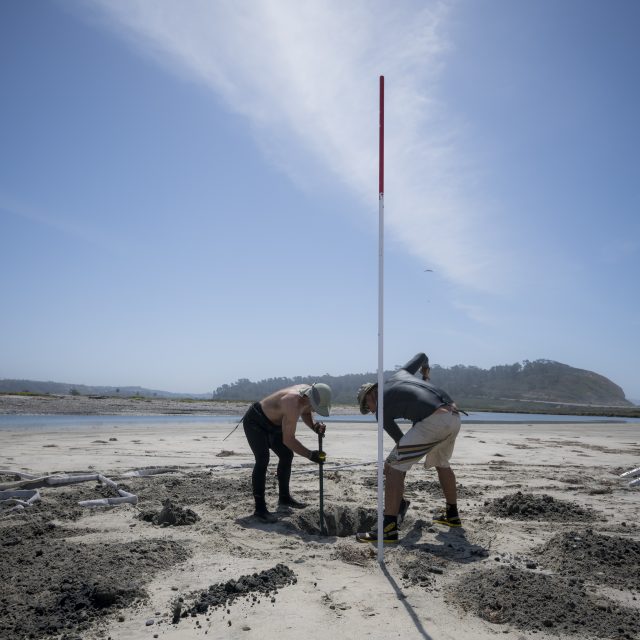
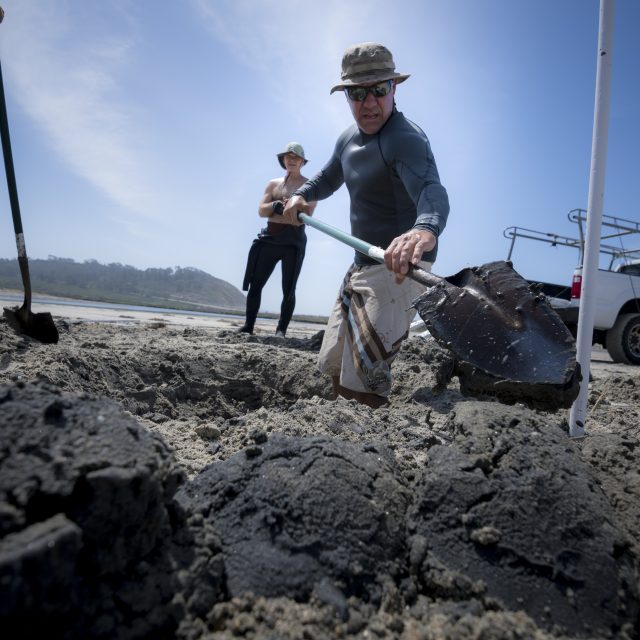
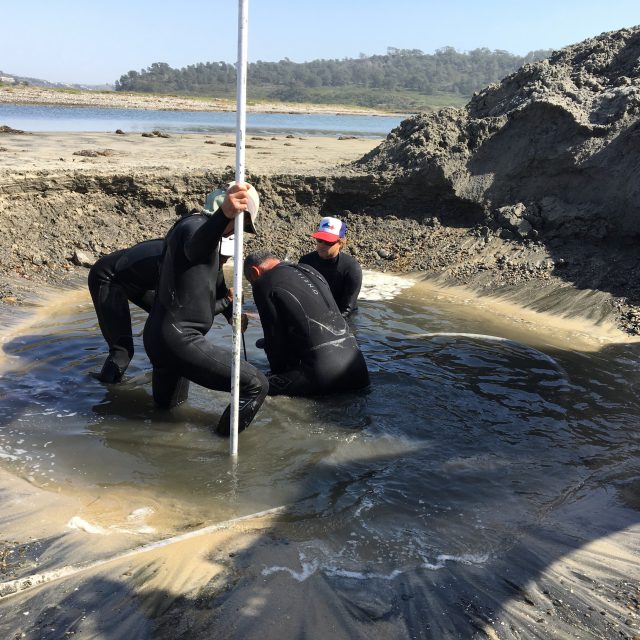
9-23 April 2018 – Nearly 2 m of sand accreted over our pressure sensor buried in the mouth of Los Peñasquitos Lagoon, making it 3 m beneath ground level. After recovering the sensor in the surfzone and attempting to recover the lagoon mouth sensor, we had to resort to heavy machinery. Since the lagoon mouth was in the process of closing, recovery was a priority before the lagoon filled with water and the recovery became impossible. After a couple long days in the field, the pressure sensor was successfully recovered!
Thanks to Erik Jepsen/UC San Diego Publications for some amazing photographs taken on the first day (before the heavy machinery!). And of course thanks to the amazing field crew – could not have done it without the immense efforts of Brian, Kent, Greg, Lucian, Rob, and Bill!
-
- the start of the hole with Bill and Kent – image courtesy of Erik Jepsen/UC San Diego Publications
-
- Greg setting up the drone survey – image courtesy of Erik Jepsen/UC San Diego Publications
-
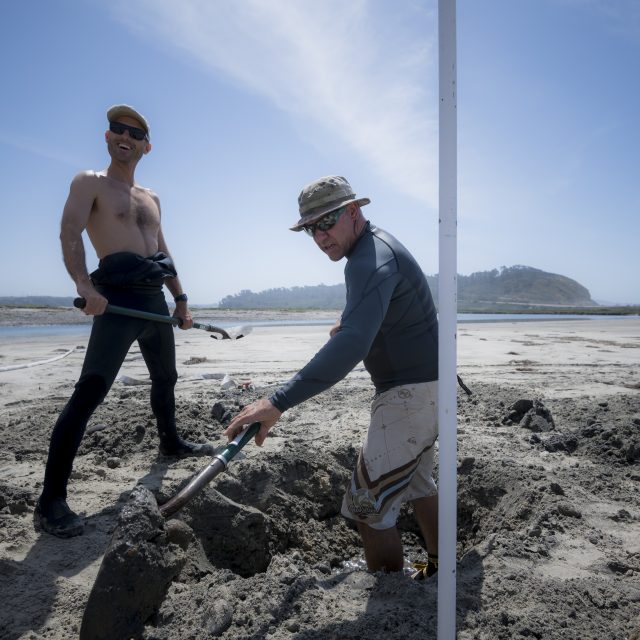
- Lucian and Kent digging the hole – image courtesy of Erik Jepsen/UC San Diego Publications
-
- Lucian and Kent digging the hole – image courtesy of Erik Jepsen/UC San Diego Publications
-
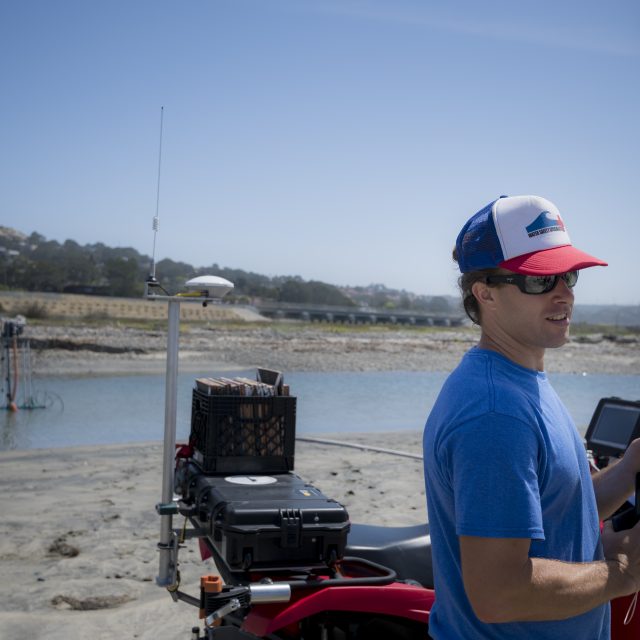
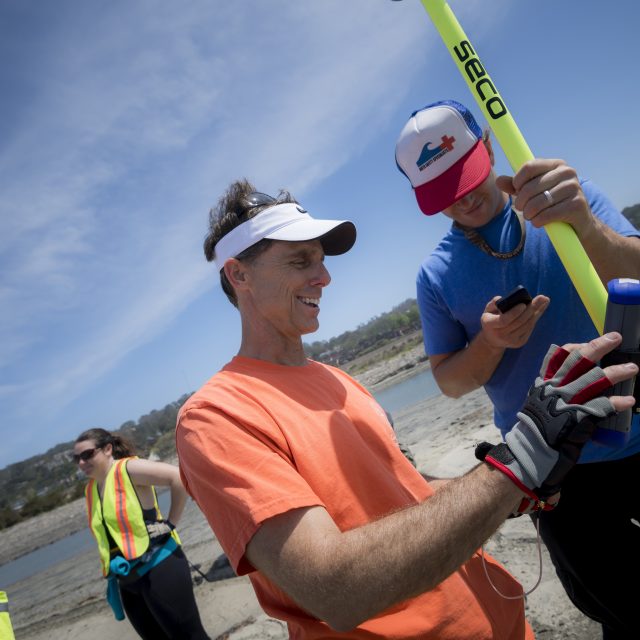
- Brian setting up the RTK – image courtesy of Erik Jepsen/UC San Diego Publications
-

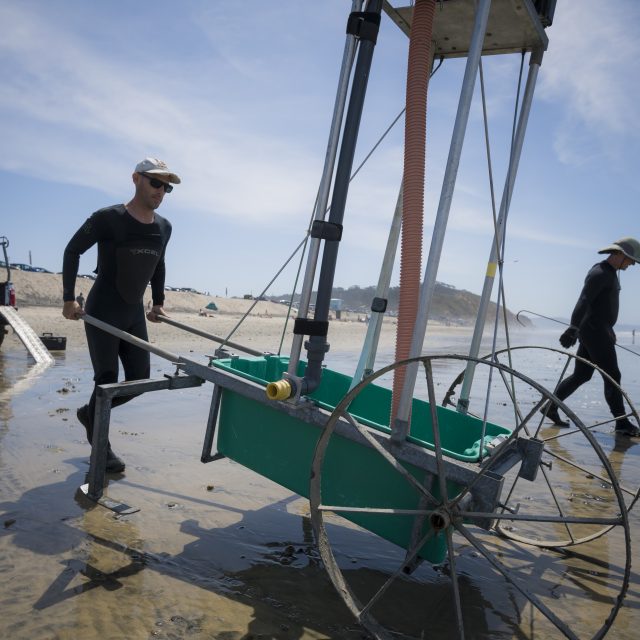
- Lucian wheeling the pump cart – image courtesy of Erik Jepsen/UC San Diego Publications
-
- image courtesy of Erik Jepsen/UC San Diego Publications
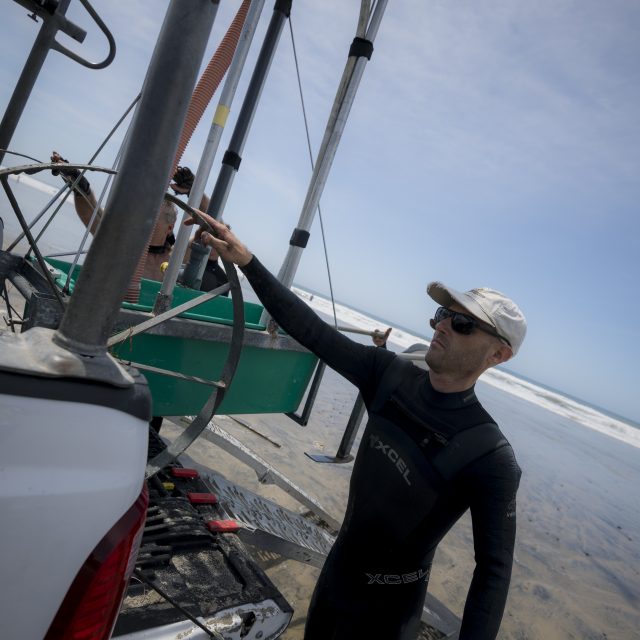
-
- Rob setting up the drone survey – image courtesy of Erik Jepsen/UC San Diego Publications
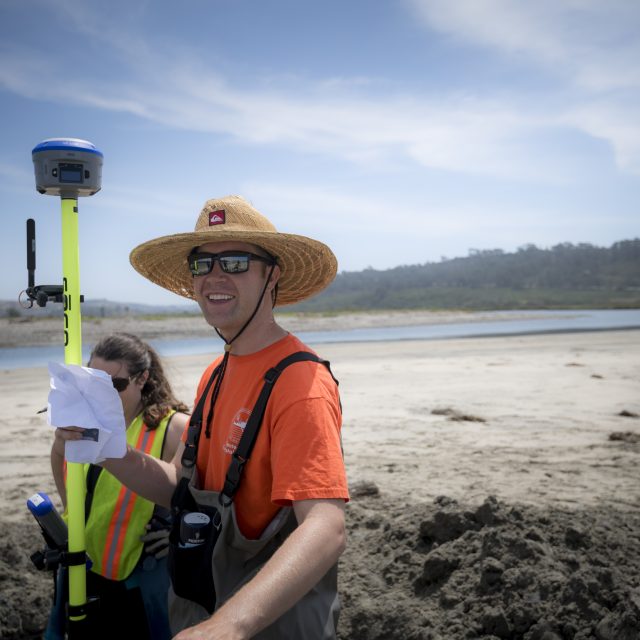
-
- Drone takeoff – image courtesy of Erik Jepsen/UC San Diego Publications

-
- Drone flight – image courtesy of Erik Jepsen/UC San Diego Publications
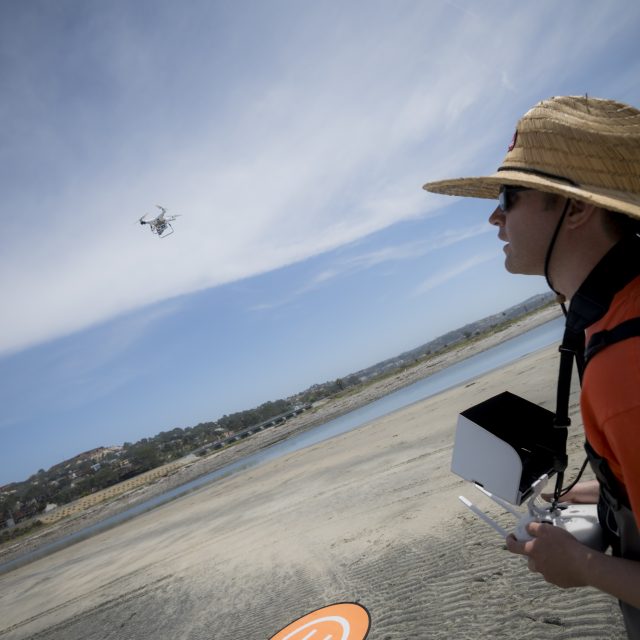
-

- starting the surfzone recovery – image courtesy of Erik Jepsen/UC San Diego Publications
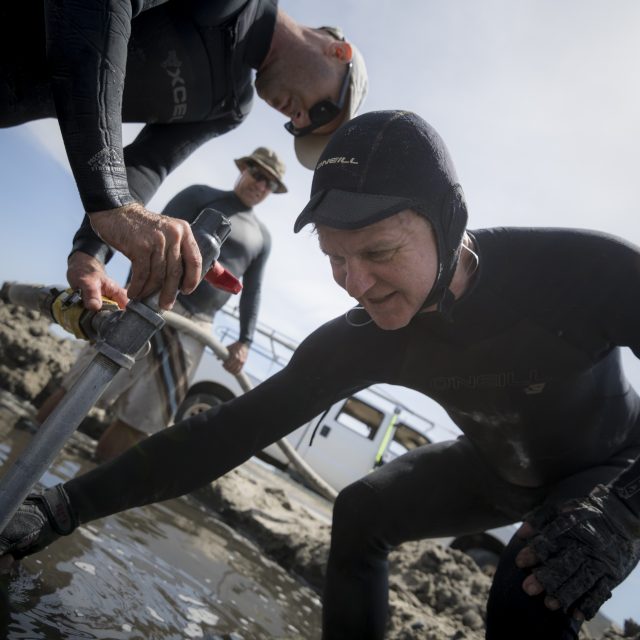
-
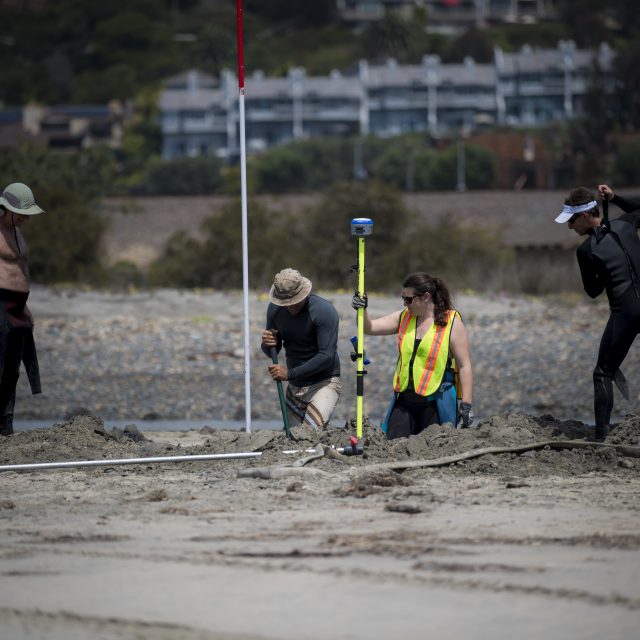
- back to the hole – image courtesy of Erik Jepsen/UC San Diego Publications
-
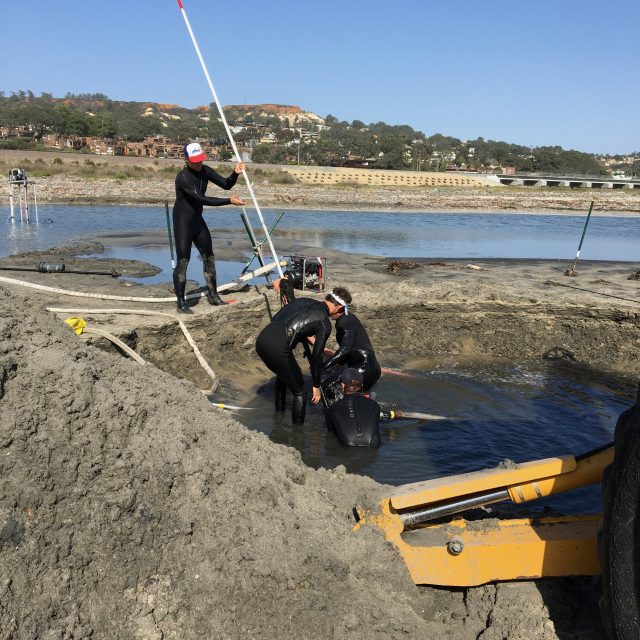
- back a few days later to make the hole bigger with heavy machinery

-

- getting bigger!
-
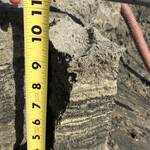
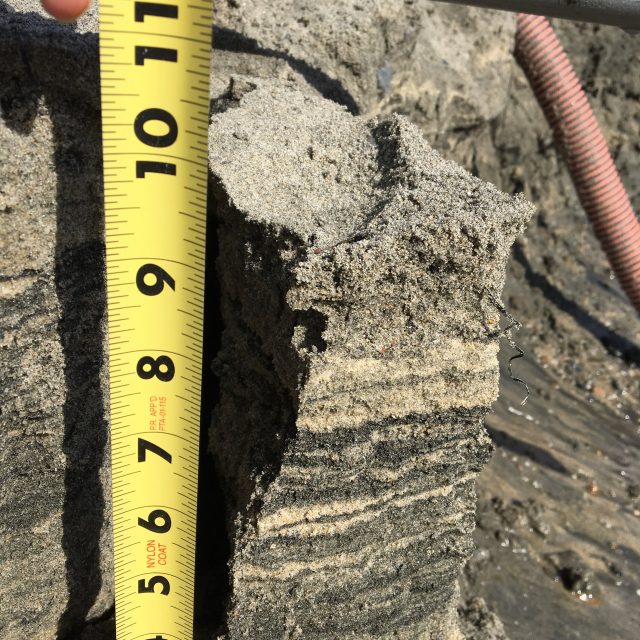
- amazing sand layering observed
-

- part way there


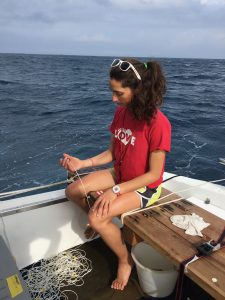 During January 2018, we returned to the Seychelles to continue our research there as part of the